
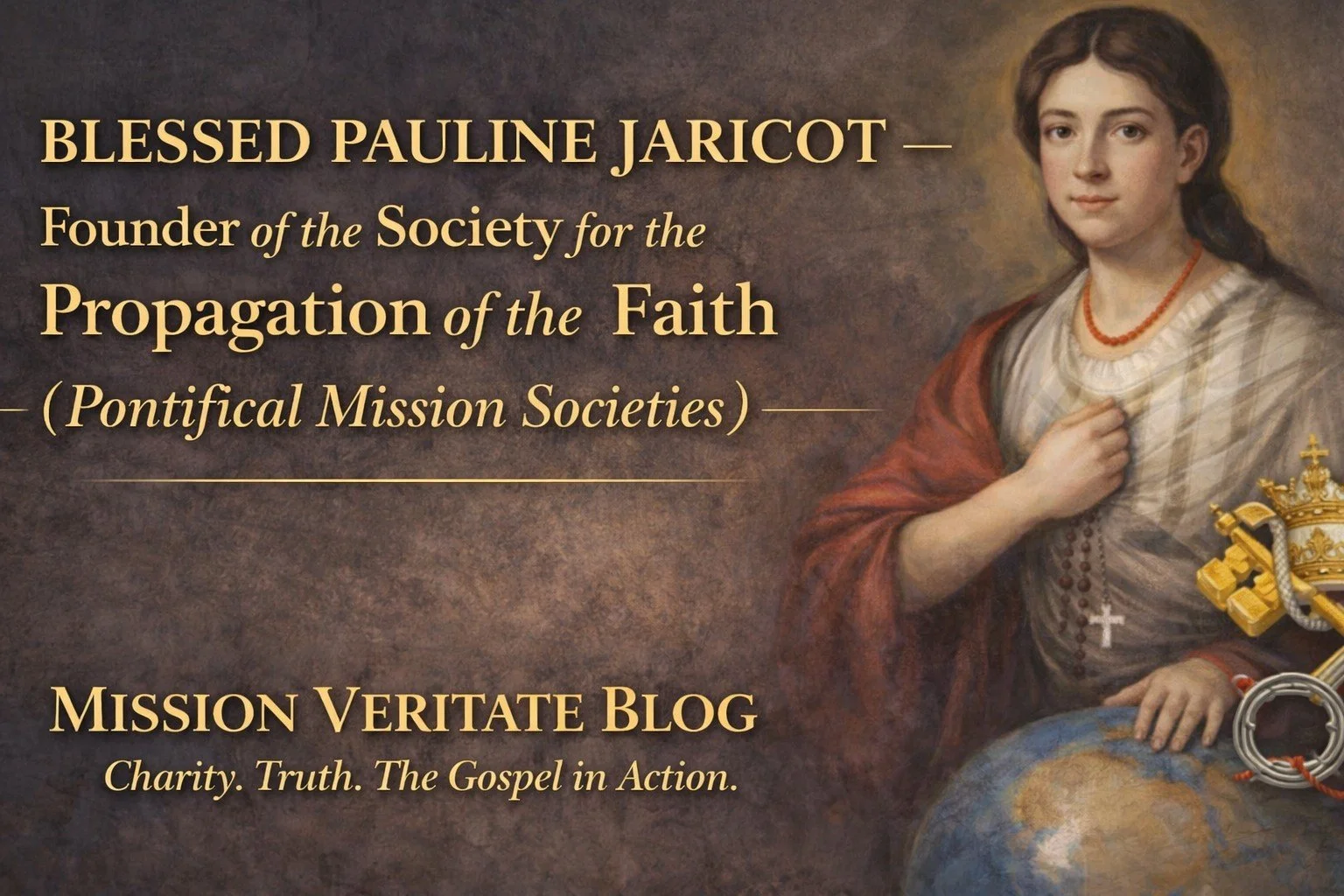
TO THE ENDS OF THE EARTH — HOW Blessed PAULINE JARICOTA, A CATHOLIC LAYWOMAN, STARTED A WORLDWIDE MISSION MOVEMENT: THE SOCIETY OF THE PROPAGATION OF THE FAITH, NOW KNOWN AS THE PONTIFICAL MISSIONS SOCIETY.
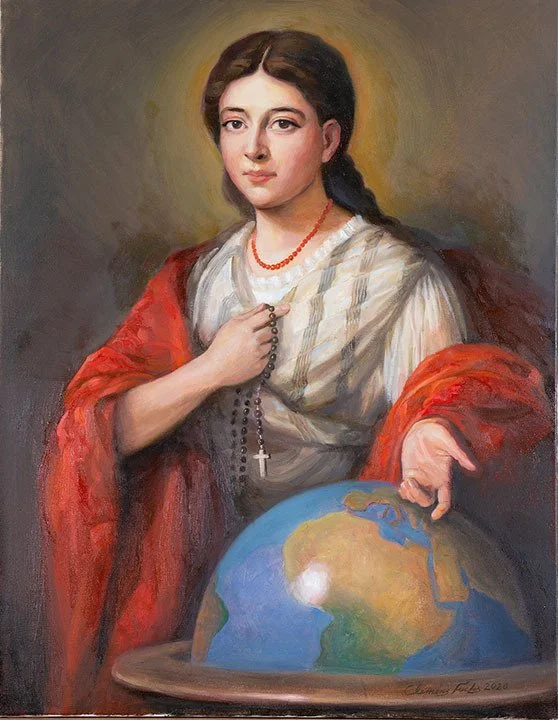
In every age of the Church, God raises up ordinary people to accomplish extraordinary things.
One of the greatest examples of this is Pauline Jaricot, a young laywoman from Lyon, France, whose simple idea became one of the most important missionary movements in the history of the Church.
Blessed Pauline Jaricot was not a nun, not a missionary, and not a famous scholar.
She was simply a woman with deep faith, a love for the Gospel, and a desire to help bring Christ to those who had never heard His name.
In the early 1800s, Blessed Pauline learned about missionaries struggling in distant lands — places where the Gospel had never been preached and where the Church had little support.
She believed that ordinary Catholics could help if they worked together.
Blessed Pauline Jaricot — One Person Who Changed the World of Mission
In 1822, Pauline saw the need to support missionaries who were preaching the Gospel in places where Christ had never been heard.
She believed that ordinary people could help if they worked together.
From humble beginnings, small groups were formed who prayed for the missions and gave small offerings to support evangelization.
From this effort was born the first Pontifical Mission Society:
The Society for the Propagation of the Faith
This movement spread across the world and became part of the Pontifical Mission Societies, helping missionaries bring the Gospel to nations, tribes, and villages where Christ had never been known.The Association of the Living Rosary
Another important work begun by Pauline Jaricot was the Association of the Living Rosary, founded in 1826.
Her idea was simple but powerful. The fifteen decades of the Rosary were divided among fifteen people, with each person praying just one decade each day. In this way, the full Rosary was prayed daily as a group, uniting many souls in prayer for the missions and for the needs of the Church.
The devotion spread quickly throughout France and then to other countries, becoming one of the most influential lay prayer movements of the 19th century. In 1832, Pope Gregory XVI granted the association official canonical approval, recognizing the spiritual value of Pauline’s work.
Over the years the Living Rosary continued to grow, reaching millions of members around the world, especially in missionary countries. Even in modern times the devotion has been revived, with faithful groups again forming small circles of prayer, each person offering one decade of the Rosary for the salvation of souls and the spread of the Gospel.
Blessed Pauline Jaricot understood that great missionary works are sustained not only by money and organization, but by prayer.
Through the Living Rosary, ordinary people could take part in the mission of the Church every day, no matter where they lived.
Her vision remains a reminder that the power of the Rosary can unite believers across the world in the work of evangelization.
Resistance and Doubt — Even from the Clergy
When Blessed Pauline Jaricot began this work, not everyone immediately understood her vision.
At that time, missionary work was usually organized by clergy or religious orders, and the idea that a young laywoman could begin a worldwide missionary support movement seemed unusual to many.
Some members of the clergy were cautious and unsure whether such a movement should be led by a lay person.
Others doubted that small groups of ordinary Catholics could truly support the missions in distant lands.
Blessed Pauline did not argue or rebel.
She responded with humility, obedience, and perseverance.
She remained faithful to the Church, continued her work quietly, and trusted that if the work was from God, it would bear fruit.
Over time, the fruits became impossible to ignore.
The movement spread across France, then across Europe, and eventually throughout the world.
What began with one laywoman was later recognized and embraced by the Church and became part of the Pontifical Mission Societies, serving the missionary work of the Holy Father.
The story of Pauline Jaricot reminds us that many great works in the Church begin with misunderstanding, hesitation, and resistance —
but when the work is truly from God, it endures. Pauline Jaricot’s holiness was later recognized by the Church, and she was declared Blessed Pauline Jaricot after her beatification approved during the pontificate of Pope Francis, affirming the lasting importance of her life, her faith, and her missionary vision.
The same missionary spirit continues today.
Our work among the Sakuma people in Tanzania — building a maternity hospital, supporting evangelization, and serving remote communities with the permission of the local Archbishop — follows this same vision: https://www.liftlifeglobal.org/

To go where Christ has not been preached
To serve where the need is greatest
To bring both charity and the Gospel
Blessed Pauline Jaricot showed the world that you do not need to be famous to do something great for God.
You only need faith, perseverance, and the courage to begin.
Today, that same missionary spirit continues.
In our own time, we see this vision alive in new mission fields —
among remote tribes, forgotten villages, and places where the Church is still young.
Mission has always meant going where others will not go.
Serving where the need is greatest.
Bringing both the Gospel and works of charity to those who have never heard.
From one laywoman in Lyon
came a movement that reached the whole world.
And the mission is not finished yet.